
The Reunion
A Psychological Thriller Duology
The same night, the same place, the same ensemble – but two opposing perspectives.
Developed for roles with psychological charge, subtext, and shifting meaning between the two films.
About the Films • Producer page • Director • Cast • Composer • Visual
Sales Agent / International Market • Co-production & Financing Structure • Indicative budget



Why this project may be especially attractive for actors
- Completed screenplays with clearly defined roles, strong internal dynamics, and psychological friction
- Two feature films in which the same night takes on new meaning depending on perspective
- Roles where a scene, glance, or silence can carry a different charge in the sister film
- Dark Nordic tonality with a focus on subtext, control, guilt, and emotional precision
- The project is currently attracting interest from high-level Swedish and international creative talent, including one of Sweden’s most acclaimed Guldbagge Award-winning actors, an internationally award-winning director, and several established composers with Guldbagge nominations and international credits
A unique narrative structure The Zeipel Method - A Fixed Narrative Rule Framework
The project introduces an unusual narrative format: two complete feature films unfolding during the same night, with the same ensemble, but from two opposing perspectives.
Both films function fully as standalone works, yet together they form a unique narrative design in which viewing order shapes the audience’s experience – and in which several roles take on a different charge when the full picture emerges.
The Zeipel Method describes the structural architecture that allows the two films to work together.
At the same time, the creative priority always remains the same: to make the strongest films possible.
For actors, this means a format in which a role’s resonance exists not only within the individual film, but also in how the sister film shifts the audience’s understanding of motive, guilt, and relationships.
Further reading: The unique narrative structure (PDF)
For actors & representation – in brief
- Logline: Two films. One night. Two truths.
- Developed as two complete feature films that each stand fully on their own, while together deepening and strengthening the story
- Screenplays completed in Swedish and English
- Internationally recognised, with finalist placements and a win in major screenplay competitions
- The screenplays have been validated by one of the leading agencies in the Nordic region and were subsequently forwarded to a Guldbagge Award-winning actor for consideration for a central role
- The project is currently in creative dialogue with several established screen composers, ranging from Guldbagge-nominated Swedish names to internationally recognised composers
- The screenplays are currently being read by an internationally award-winning director
- Lookbooks are available for all 14 roles
- The project is seeking actors with a feel for subtext, ensemble work, and psychological precision
- Producer: In dialogue with several production companies across the Nordic region and Europe regarding a Nordic/European co-production. Producer page →
- Contact me for screenplays, role material, or further dialogue
The idea of the duology
Final Reunion and The Reckoning take place during the same winter night on an isolated island in the Stockholm archipelago. The story contains the same ensemble, the same timeline, and the same enclosed setting, but seen from two entirely different perspectives.
In the first film, we experience how a group of former classmates slowly slide into destructive mistrust inside the cabin.
In the second, we follow the events outside and behind what first seemed coincidental – where motive, consequence, and causality become clear.
The two films do not mirror each other scene by scene. They exist within the same time frame – but tell two emotionally and morally different stories.
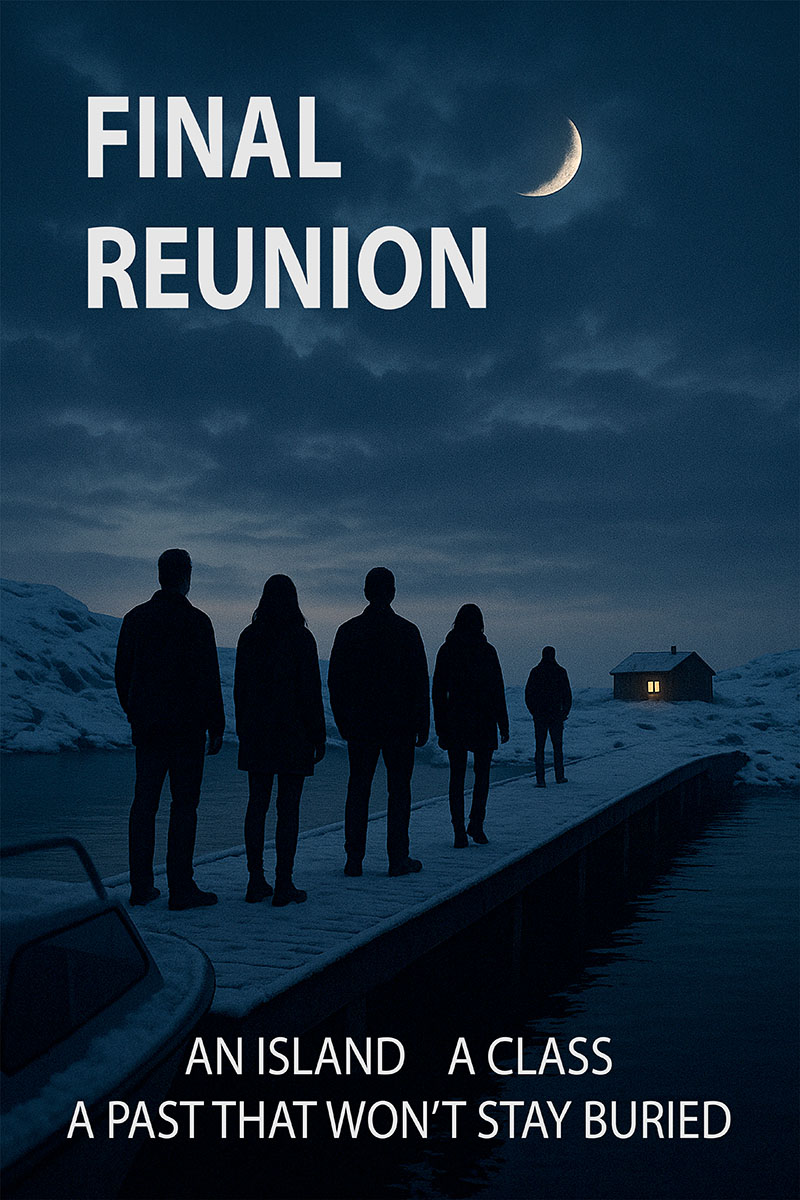
A contained, ensemble-driven Nordic noir whodunit: guilt, group dynamics, and the return of old roles.
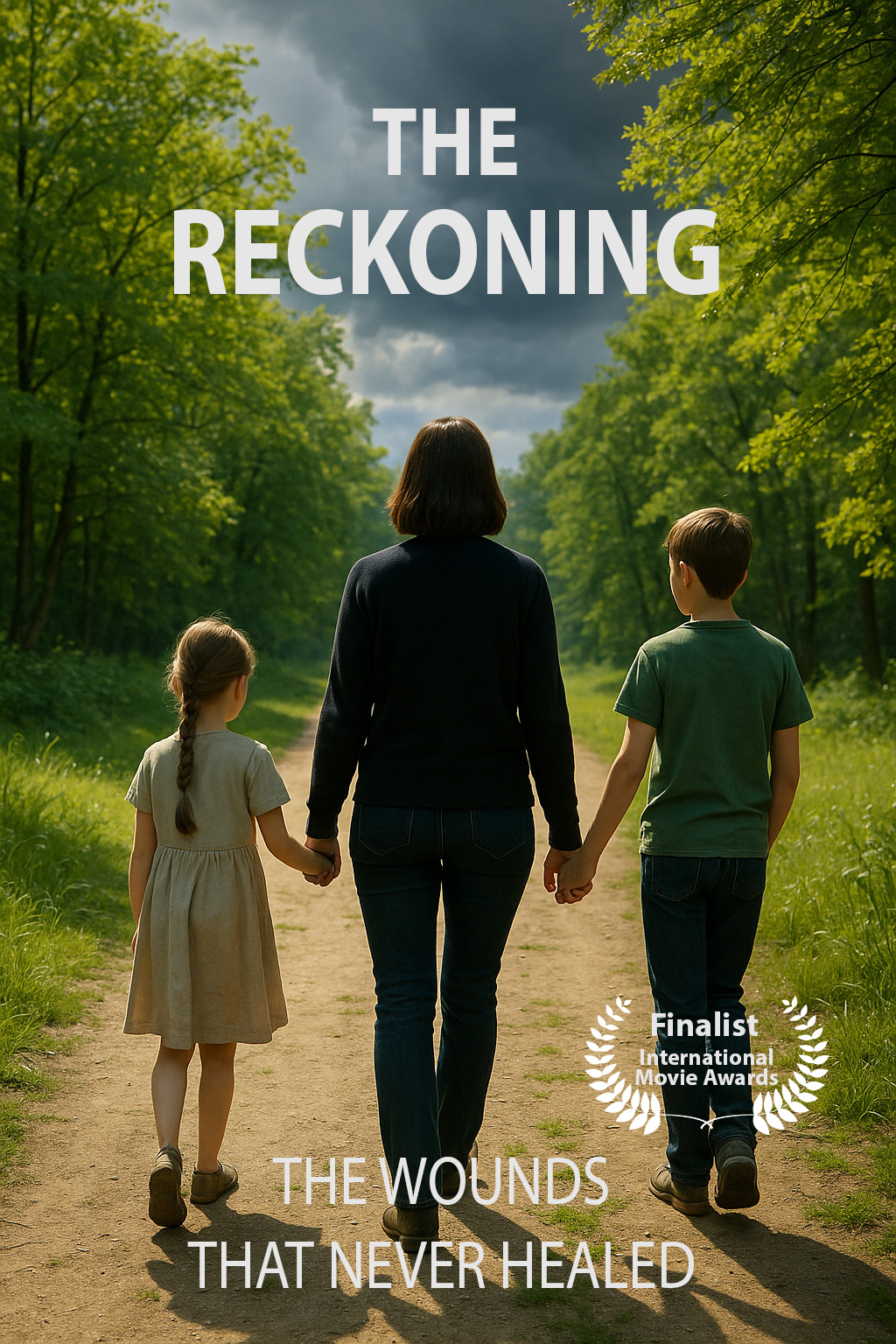
The same night, seen from the opposite POV – deepening motive, causality, and moral consequence.
Roles in the duology
Each image below has been chosen to reflect the specific role’s tone, energy, and psychological charge.
A role built on discipline, loss, and suppressed rage. Inger carries the drama through what remains unsaid, until action becomes the only language left.
A role built on self-control, old shame, and a fierce need to see the truth without softening it. What is first held back gradually grows into a quiet and implacable strength.
A role built on control, displaced love, and a growing need to control what he cannot have. What first appears as steadiness and care gradually shifts into something darker and more dangerous.
A role built on human presence, integrity, and a body that carries the memory of what happened. Jessica is open without being naive, and that is exactly why her strength becomes so clear when the truth emerges.
A role built on aggression, shame, and a lifelong readiness to strike first. Roger carries both real danger and deeper vulnerability, which makes him more human than he first appears.
A role built on physical reassurance, quiet integrity, and an old wound that never fully healed. Max carries a human weight that grows stronger the more the group falls apart.
A role built on emotional steadiness, attentiveness, and a strong ability to sense what is beginning to crack. Karin carries human warmth and dignity without ever becoming sentimental.
A role built on control, self-protection, and a strong need never to end up at the bottom again. Camilla wears her hardness like armour, but underneath there is guilt, fear, and fractures she refuses to show.
A role built on humour, deflection, and a strong need never to be the weakest person in the room. Tobbe keeps everything in motion to avoid feeling, and that is exactly what makes his shift so dangerous.
A role built on order, moral self-image, and a strong need to understand and control the situation. Niklas wants to be the one who sees most clearly, but beneath the control lie guilt, tension, and a need to be on the right side.
A role built on understated presence, social sensitivity, and an ability to see what others miss. Klas does not seek power or position, but his gaze and humanity give him a weight that grows throughout the story.
A role built on empathy, hesitation, and the painful awareness of having seen more than she acted on. Eva carries warmth and humanity, but also a guilt that has never truly left her.
A role built on human openness, quiet integrity, and a sorrow already living in the body. Fredrik carries an unusual absence of hardness, which makes him both easy to like and painful to follow.
A role built on restraint, integrity, and a lifelong habit of never quite being seen. Sigrid wears her distance as self-protection, but underneath it lies loneliness and an old experience of being left outside.
Tone & acting style
- Much of the drama lies in glances, pauses, and small shifts in group dynamics
- Relationships, guilt, and power play carry the story more than exposition
- The roles require presence, responsiveness, and precision within an ensemble

- Dark, realistic, and psychologically charged tonal identity
- The roles are carried by control, fractures, inner friction, and shifting audience identification
- The format gives several roles a different meaning when the sister film adds motive and context
Development status
- Both screenplays completed (Swedish & English)
- Full synopsis (A–Z) – Final Reunion
- Full synopsis (A–Z) – The Reckoning
- Additional role material available on request
- Parallel presentation pages are available for:
producers, directors and composers
English versions are available via the language options above
The screenplays have received international recognition through finalist placements in established screenplay competitions, confirming both their individual strength and international potential.
- Final Reunion
Finalist, Palm Springs Int. Screenplay Contest
Finalist, US-Cut, Mediterranean Screen Arts
- The Reckoning
Winner, International Movie Awards 2026
Finalist, International Movie Awards 2026
Finalist, London Int. Screenwriting Comp. 2026
Finalist, Melbourne International Awards 2026
Industry recognition
Independent jury statements highlighting emotional power, craftsmanship, and ensemble quality.“Overall, the human ache sustains the genre machinery. That balance is rare and lovely. My kid’s asleep and I’m tearing up over a cafeteria from 1989. That’s a win.”
Final Reunion – Palm Springs Int. Screenplay Contest (Finalist 2025)
Read the full jury statement (PDF)
“On a craft level, the script is cinematic and controlled.”
The Reckoning – Santa Barbara Screenplay Awards (2026)
Read the full jury statement (PDF)
“The core premise is commercial for a contained thriller.”
The Reckoning – Palm Springs Int. Screenplay Contest (2026)
Read the full jury statement (PDF)
“For producers and development executives, the script offers intense, high-quality writing and layered ensemble roles that attract prestigious casts and festival attention.”
The Reckoning – London International Screenwriting Competition (2026)
Read the full jury statement (PDF)
“The script is a mature, atmospheric thriller that prioritises emotional truth and moral complexity.”
“There is a quiet intensity to the storytelling that draws the audience in without relying on overt manipulation.”
The Reckoning – Melbourne International Screenplay Awards (2026)
Read the full jury statement (JPG)
References
These references indicate tonal territory rather than a fixed stylistic template.
- The Invitation (2015) – reunion unease, buried guilt, and psychological escalation
- Speak No Evil (2022) – social discomfort, suppressed aggression, and moral cruelty
- The Hunt (2012) – collective suspicion, social paranoia, and relentless group pressure
- Identity (2003) – stranded ensemble, escalating paranoia, hidden design
Rights & availability
- Screenplays available on request
- Role material and lookbooks available on request
- Conversations about roles, tone, and the project’s creative direction are welcome
About the creator
Staffan von Zeipel is a screenwriter and creator with a focus on contained psychological thrillers and character-driven genre films. He is the creator of The Reunion (Final Reunion / The Reckoning), a Nordic noir duology in which two feature films take place during the same night, with the same ensemble and location.
With a background in project leadership and complex development processes, Staffan approaches The Reunion as a larger film project rather than merely two separate screenplays. He is deeply engaged in the project’s narrative structure and thematic core, but open to further professional development in collaboration with the right producer, director and key creative partners.
Contact
LinkedIn: LinkedIn/zeipels
IMDb: imdb/staffanvonzeipel